

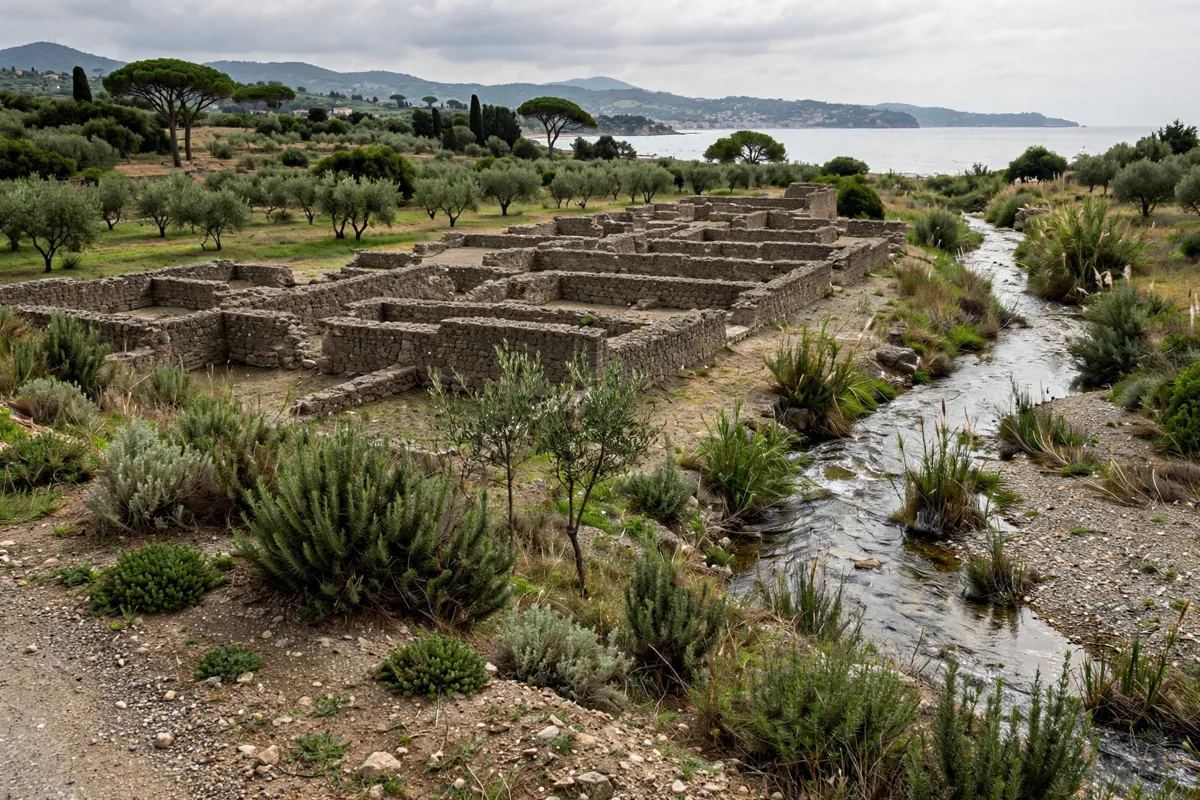
Villa romana di Bussana is an archaeological site in Sanremo, near the mouth of the Armea stream. You can view its remains from the road, including structures linked to production and a distinctive tomb, with educational panels on site.
- Location: Via al Mare, 18038 Sanremo (IM), Italy
- Viewing pattern: visible from the road every day
- Reservation: not required for the stated roadside viewing
Where the Roman villa is
Villa romana di Bussana stands in the Capo Marine area, close to the mouth of the Armea stream. Its address is Via al Mare, 18038 Sanremo (IM), Italy.
The villa was probably built along the route of the Via Julia Augusta or a secondary road connected to it. The setting places the remains in a coastal part of Sanremo, rather than in the city centre.
If you are planning a wider city visit, a guide to Sanremo’s streets and sights can help put the archaeological stop in context.
What remains at the archaeological site
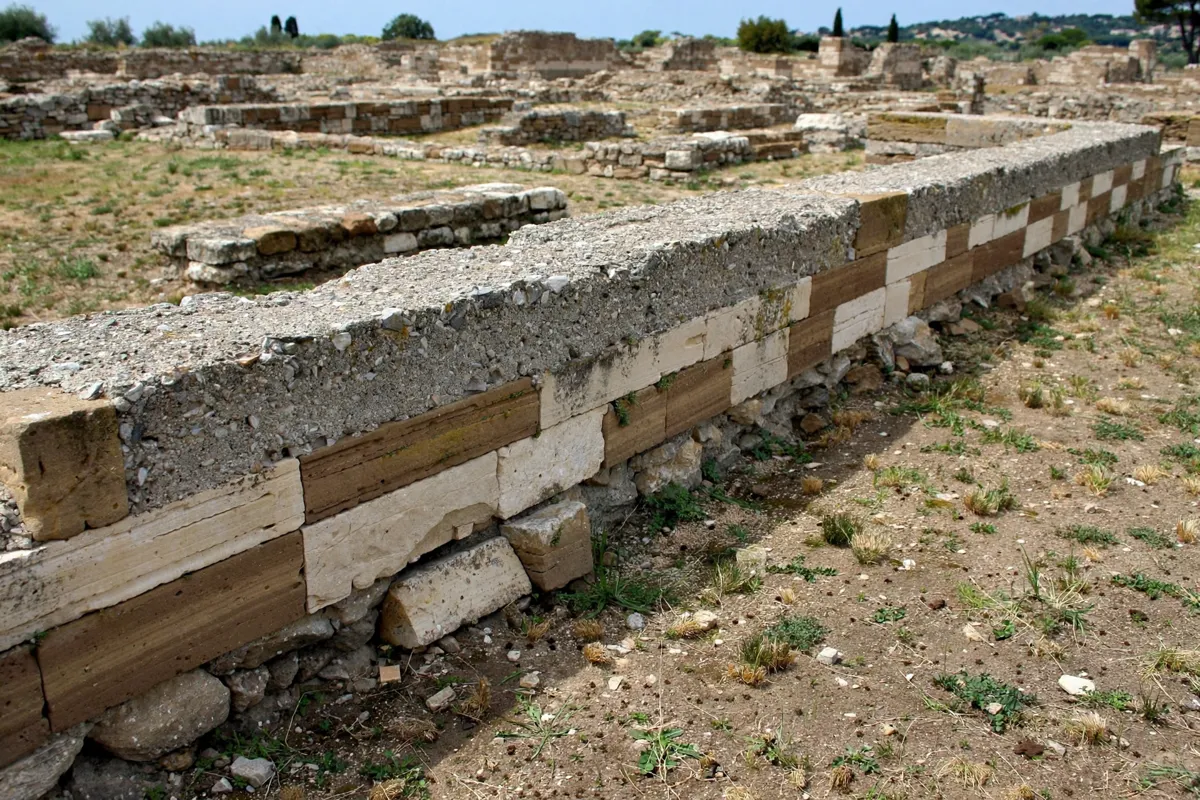
The surviving remains offer a partial view of a Roman villa that may once have included both a production area and a residential section; the residential part has not survived. The Ministry of Culture describes the surviving wall construction as concrete faced with rectangular limestone and sandstone blocks, a technique known as petit appareil.
Among the identified structures are a kiln used to fire bricks and tiles, and a water reservoir. The purpose of most of the remaining rooms is uncertain; possible uses include storage, granaries or other domestic activities.
Outside the villa’s perimeter walls is a quadrangular tomb with a semicircular interior forming a large apsidal niche. It may have held a commemorative statue of the deceased or a deity.
Ceramics from the kiln, coins and inscriptions date construction of the villa and tomb to the 1st–2nd centuries AD. These finds also indicate that the villa remained in use through the 3rd century AD.
Access, hours and visitor conditions
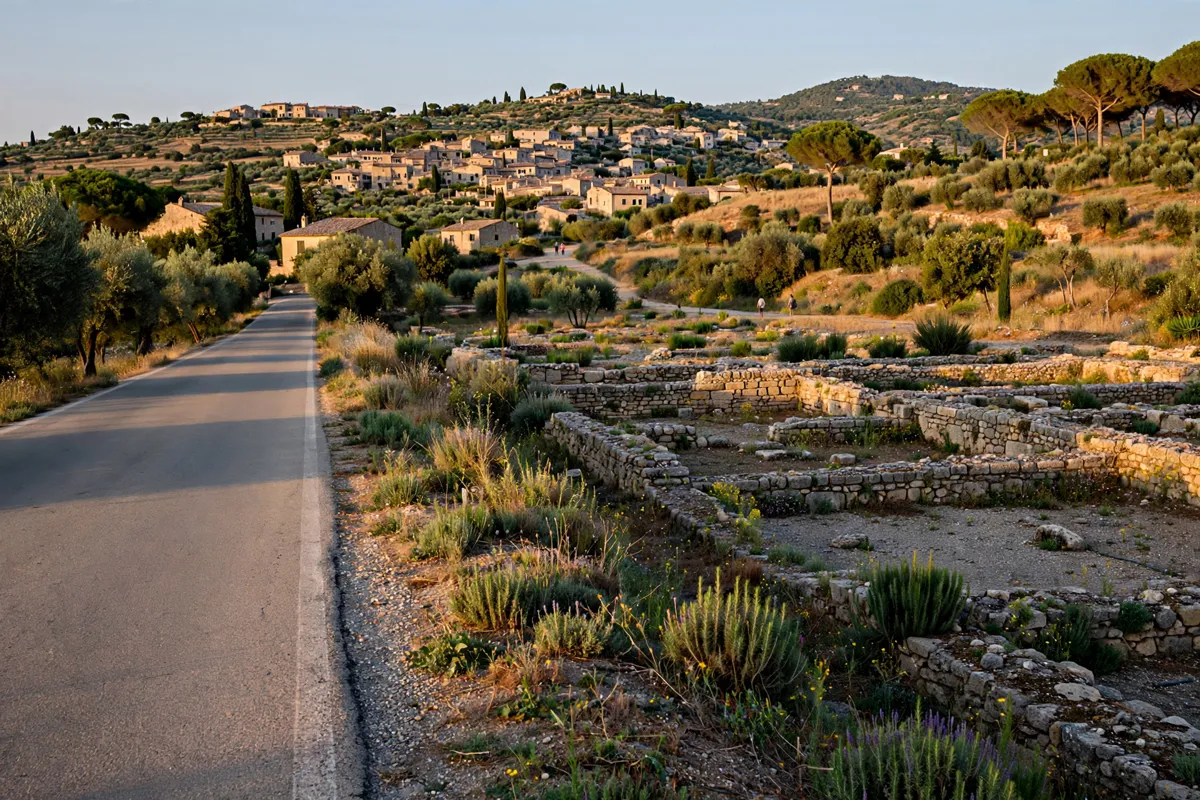
The Italian Ministry of Culture describes Villa romana di Bussana as visible from the road every day, with educational panels. No reservation is required for this roadside viewing. The entry gives no clock-time opening hours, admission price, regular guided-visit schedule or details about entering the remains.
For the current visitor information, check the Italian Ministry of Culture’s official site before you go. The contact number is +39 010 27181; email addresses are sabap-liguria@cultura.gov.it and sabap-liguria@pec.cultura.gov.it.
How do you get to Villa romana di Bussana from Hotel Corso?
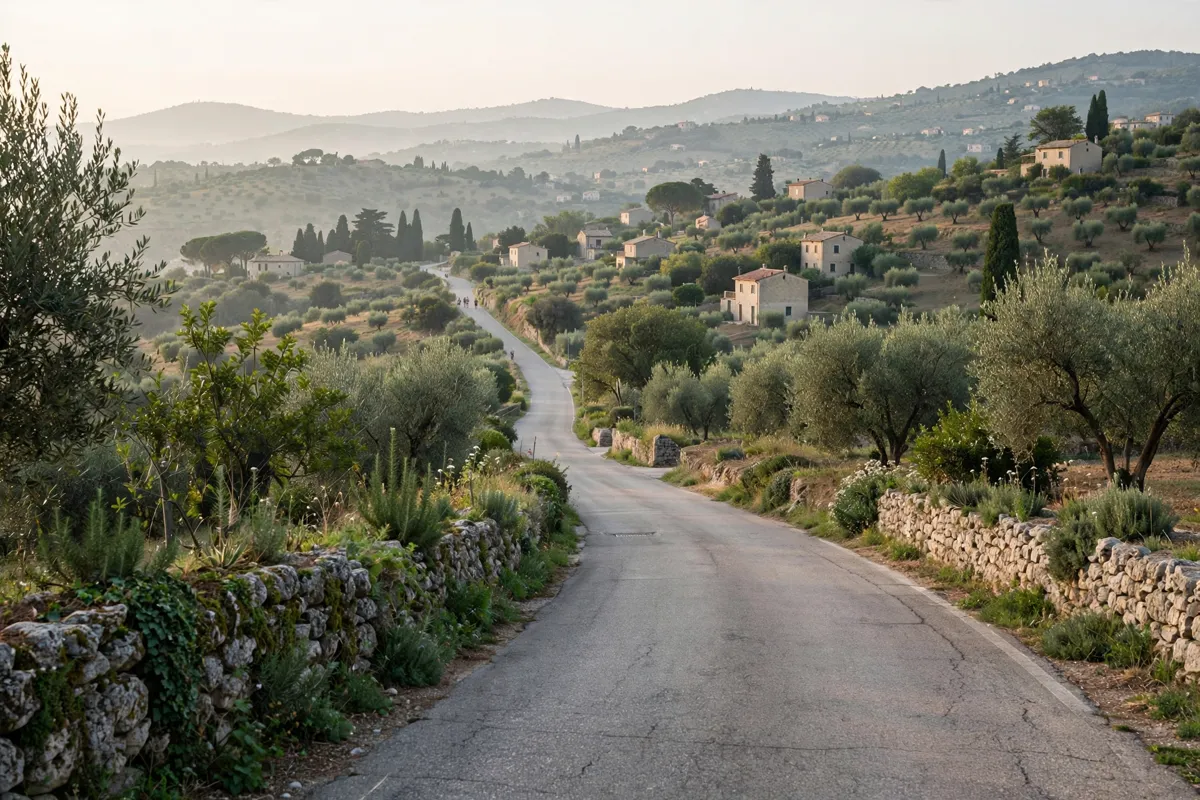
The site is about 3.5 km from Hotel Corso, around 7 minutes by car or 50 minutes on foot. These figures give you a simple way to compare the two options when planning your visit.
For a broader day plan, the one-day Sanremo route can help you place the villa alongside other stops in the city.
Combining the site with a Bussana outing
The mapped location of the villa is 300 metres southwest of Bussana Vecchia. The Biblioteca della Frazione di Bussana is 300 metres north of the mapped site, giving you two nearby place names to orient yourself around the archaeological stop.
The villa’s roadside setting and the nearby Bussana locations make it possible to plan the archaeological visit as part of a wider outing in the area. Keep in mind that the access information covers viewing from the road, not entry into the remains.
FAQs
Can you enter the Roman villa?
The site is described as visible from the road. There are no details about access inside the archaeological remains.
Do you need to reserve a visit?
No reservation is required for the stated roadside viewing.
What can you see at the site?
Identified remains include a kiln, a water reservoir and a tomb with an apsidal niche. The surviving rooms also show the villa’s distinctive masonry.
How old are the remains?
Finds date construction of the villa and tomb to the 1st–2nd centuries AD, and show use of the villa through the 3rd century AD.